This article explains structural load paths in buildings using simple examples to illustrate how forces travel from roofs through framing to foundations, highlighting their importance in safe and effective design.
Understanding Structural Load Paths
Structural load paths describe the route that forces take as they move through a building’s structural elements down to the foundation and ground. When a load such as weight or wind pressure acts on a building, it doesn’t just stay in one place. Instead, it travels through beams, columns, walls, and other components until it is safely transferred to the earth. Grasping this concept is essential for engineers to design structures that remain stable and safe under various conditions.
Why Load Paths Matter in Building Design
Load paths ensure that every load applied to a structure has a clear, continuous path to the ground. If this path is interrupted or weak, parts of the building can experience excessive stress, leading to damage or failure. For example, if a roof load is not properly transferred to supporting walls or columns, the roof may sag or collapse. By understanding load paths, engineers can select appropriate materials and connection details to safely carry loads.
Basic Load Types in Buildings
Buildings experience several types of loads, including:
- Dead loads: permanent static weight of structural components like beams, floors, and roofs.
- Live loads: temporary or movable weights such as people, furniture, and snow.
- Environmental loads: forces from wind, earthquakes, or temperature changes.
Each load type travels through the structure differently, but all must follow a continuous load path to the foundation.
Simple Example: Single-Story Wood Frame House
Consider a single-story wood frame house with a pitched roof. The roof’s weight (dead load) and snow accumulation (live load) push downward on the roof sheathing and rafters. These loads transfer to the top plates of the exterior walls through the rafters. The walls then carry the loads down through the studs to the bottom plates and finally to the foundation.
In this example, the load path is:
Roof sheathing Rafters Top plates Wall studs Bottom plates Foundation Ground
Any break in this chain, such as a missing stud or weak connection, can cause localized failure. Proper nailing, bolting, and continuous framing members ensure loads flow smoothly.
Multi-Story Building Load Paths
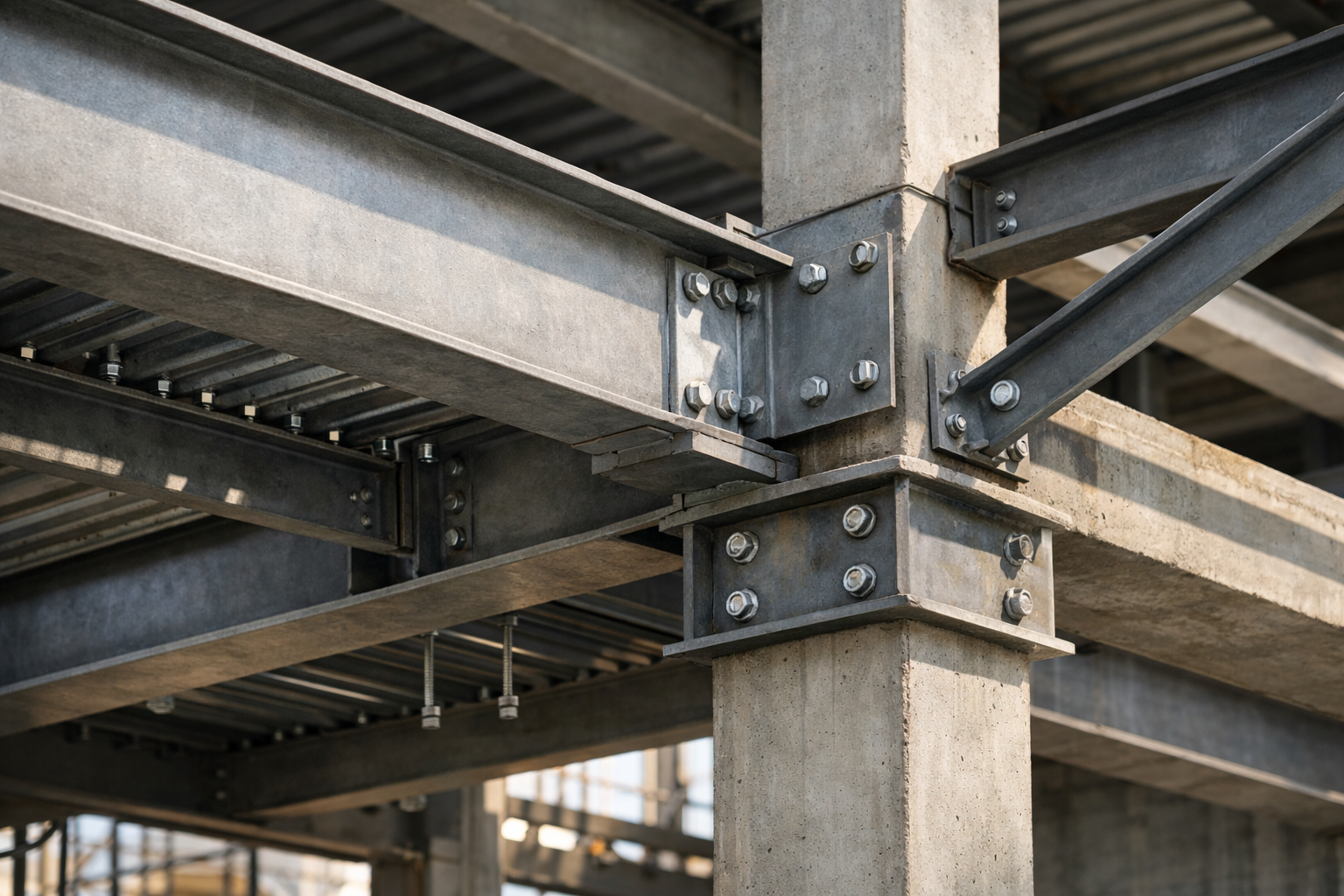
In taller buildings, load paths become more complex. For instance, in a three-story steel-framed office building, roof loads and live loads transfer to steel beams. Those beams transfer loads to columns, which carry them down through each floor level to the foundation.
Connections between beams and columns are critical to maintaining the load path. Bolted or welded steel connections must be designed to handle both vertical loads and lateral forces like wind or seismic activity.
Lateral Load Paths and Stability
Load paths are not only vertical. Lateral forces, such as wind or earthquakes, impose horizontal loads that structures must resist. Shear walls, braced frames, and moment-resisting connections provide lateral load paths, transferring horizontal forces to the foundation.
For example, in a wood-framed house, diagonal braces or plywood sheathing on walls create stiffness and channel lateral loads down to the foundation. Without these elements, the building could sway excessively or collapse during strong winds.
Importance of Continuity and Redundancy
A continuous load path means that every structural component is linked so loads can transfer without interruption. Redundancy means multiple paths can carry loads if one path fails.
For example, in a concrete building, beams transfer loads to columns, but slabs and walls may also carry some load. If one column weakens, the load can redistribute through other members, preventing sudden failure.
Checking Load Paths in Existing Structures
Maintenance engineers and inspectors often check load paths to assess structural health. Signs of compromised load paths include cracks in walls, sagging beams, or loose connections. These issues may indicate that loads are not properly transferred, posing safety risks.
Professional evaluation and reinforcement, such as adding additional framing or braces, can restore load path integrity.
Practical Considerations for Engineers and Builders
While designing or constructing buildings, it is crucial to:
- Follow local building codes and standards that specify load path requirements.
- Use manufacturer guidelines for connection details.
- Consult structural engineers for complex load scenarios.
- Inspect load-bearing elements regularly to identify damage early.
Understanding and implementing proper load paths helps ensure durability, safety, and performance of buildings.
Conclusion
Structural load paths form the backbone of safe building design by directing forces from applied loads through the structure to the foundation. Simple examples like a wood frame house or multi-story steel building highlight how loads travel and why continuity and lateral resistance are vital. Proper design, construction, and maintenance all rely on a clear understanding of load paths to prevent structural failures and extend building life.