This article guides DIY enthusiasts through selecting appropriate sensors for simple automation projects, covering sensor types, key considerations, and practical integration tips for effective robotic applications.
Understanding the Role of Sensors in DIY Automation
Sensors are the eyes and ears of any automation project, enabling machines to detect and respond to their environment. For DIY enthusiasts working on simple automation or robotics projects, selecting the right sensors is crucial to achieve accurate performance and reliability. Sensors convert physical phenomena like motion, temperature, or light into electrical signals that a microcontroller or processor can interpret. Understanding the basic sensor functions and types helps ensure your project operates as intended without unnecessary complexity or cost.
Common Types of Sensors for Simple Projects
Several sensor types are popular among hobbyists due to their affordability and ease of use. These include:
- Infrared (IR) sensors: Useful for detecting objects and measuring distance within a short range.
- Ultrasonic sensors: Emit sound waves to measure distances more accurately over longer ranges.
- Temperature sensors: Such as thermistors or digital sensors like the DS18B20 for monitoring environmental or component temperatures.
- Light sensors: Photoresistors or photodiodes that detect light intensity.
- Touch sensors: Capacitive or mechanical switches for detecting physical contact.
Choosing the right sensor type depends on the specific parameter you want to measure and how your system will react.
Key Considerations When Selecting Sensors
When picking sensors for your project, consider factors like:
- Measurement range: Ensure the sensor can detect the values relevant to your application.
- Accuracy and precision: Higher accuracy may be necessary for critical measurements.
- Interface compatibility: Check if the sensor outputs analog or digital signals and if it matches your microcontroller’s input.
- Power requirements: Some sensors consume more power, which matters for battery-operated projects.
- Environmental conditions: Consider temperature, humidity, dust, and other factors that could affect sensor performance.
Balancing these considerations ensures the sensor fits both the technical and practical needs of your design.
Integrating Sensors With Microcontrollers
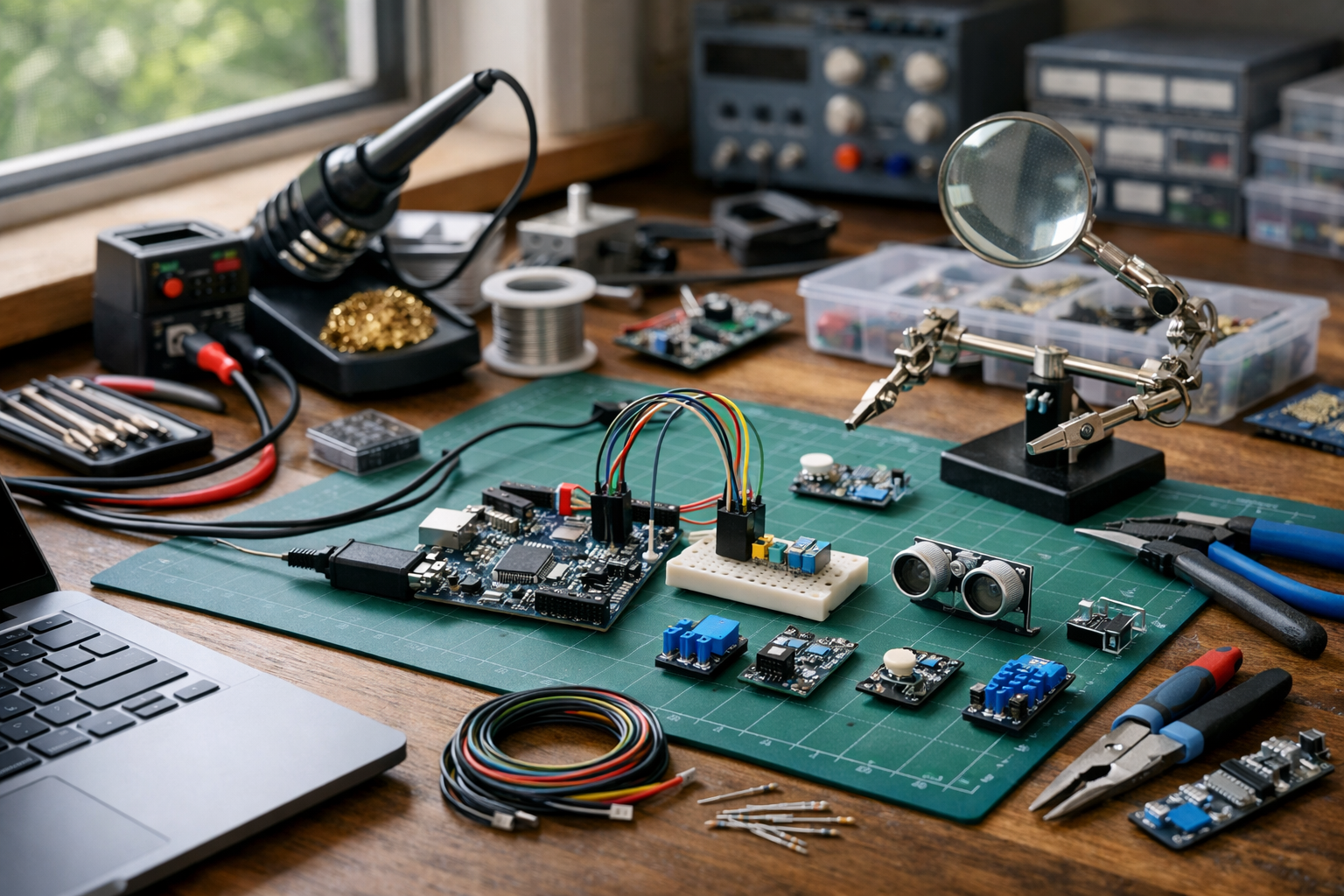
Most DIY automation projects use microcontrollers like Arduino or Raspberry Pi. Integration involves connecting sensor outputs to microcontroller inputs and writing code to interpret the data. Digital sensors often provide straightforward plug-and-play capabilities with well-documented libraries, while analog sensors require analog-to-digital conversion and calibration.
Proper wiring, including power supply and grounding, is critical to avoid noise and interference, which can cause inaccurate readings. Using pull-up or pull-down resistors might be necessary depending on the sensor type. Testing sensor output with simple sketches or scripts before full integration helps verify functionality early in the project.
Practical Tips for Sensor Calibration and Testing
Calibration ensures sensors provide accurate and consistent readings. For example, temperature sensors might require offset adjustments, and distance sensors need verification against known distances. Simple calibration methods include:
- Taking multiple readings and averaging them.
- Comparing sensor output against a known reference or standard.
- Adjusting software parameters to align sensor data with expected values.
Regular testing during development helps catch issues like sensor drift or environmental interference, improving overall system reliability.
Addressing Common Challenges in Sensor Selection
DIY projects may face challenges such as sensor noise, false triggers, or limited range. Addressing these requires:
- Using shielding or filtering techniques to reduce electrical noise.
- Implementing software debouncing or thresholding to avoid false positives.
- Selecting sensors with ranges that exceed expected conditions to provide margin.
Sometimes, combining multiple sensor types (sensor fusion) enhances system robustness by cross-verifying data.
Safety and Compliance Considerations
While simple automation projects generally pose low risk, always consider safety when integrating sensors, especially if controlling mechanical parts or electrical loads. Follow these guidelines:
- Verify voltage and current ratings to prevent damage.
- Use protective components like fuses or resistors as needed.
- Consult local electrical codes if your project interfaces with mains power.
- When in doubt, seek advice from qualified professionals to ensure safe and compliant designs.
Expanding Your Project With Sensor Modules
Many sensor modules on the market simplify integration by combining sensors with onboard signal conditioning, voltage regulation, and communication interfaces. These modules reduce wiring complexity and development time. They often come with libraries and example code, making them ideal for beginners.
However, modules can be more expensive and bulkier than standalone sensors. Evaluate your project requirements and budget before choosing a sensor module over individual components.
Final Thoughts on Sensor Selection for DIY Automation
Choosing the right sensor is essential for a successful DIY automation project. Start by clearly defining what you need to measure and the conditions your system will operate in. Research sensor options and consider factors like range, accuracy, interface, and power consumption. Test and calibrate sensors early to ensure reliable operation.
With careful selection and integration, sensors empower your projects to interact intelligently with the environment, making automation both practical and rewarding. Remember to prioritize safety and consult professional resources when necessary, especially for projects involving electrical or mechanical hazards.