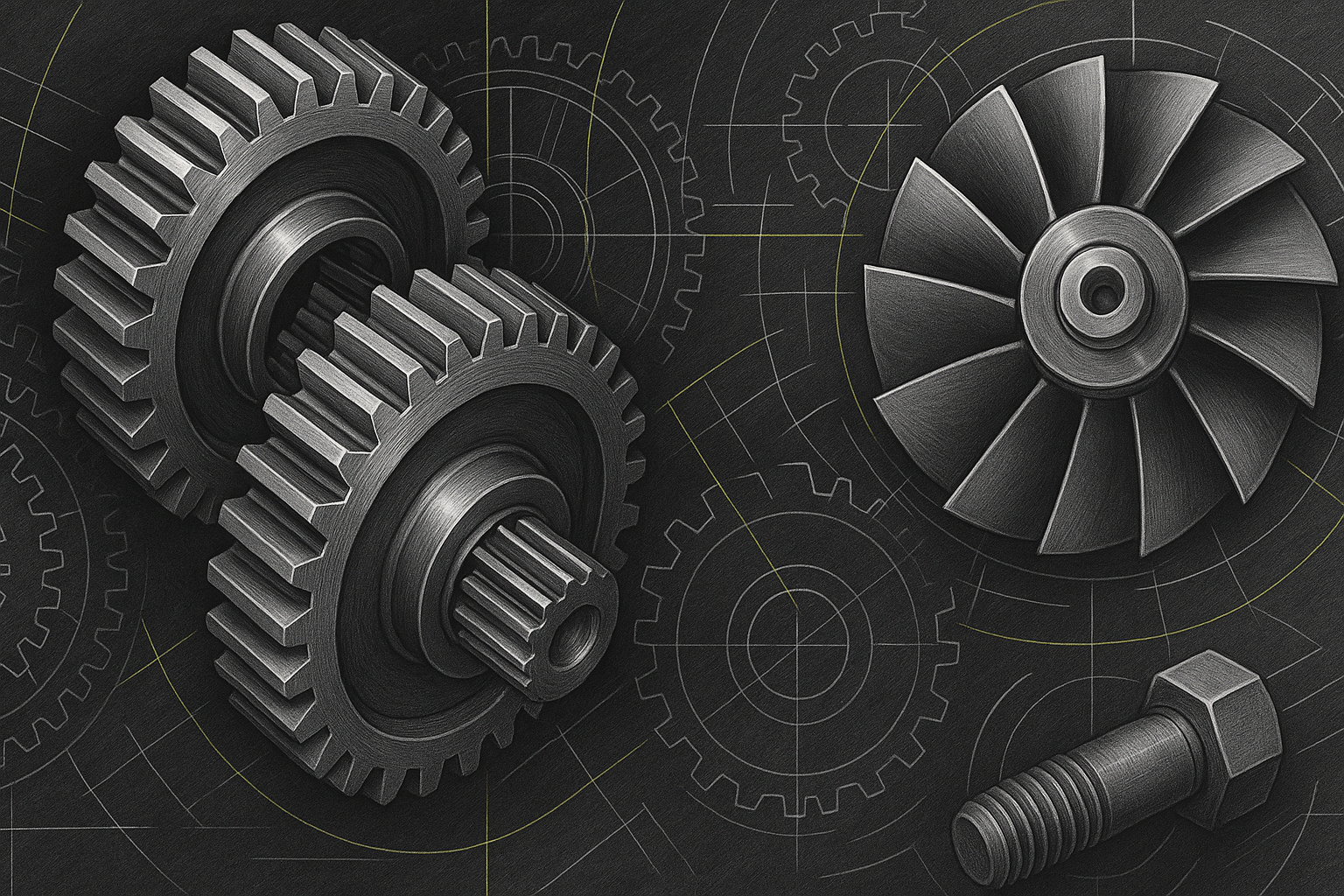
Understanding gear ratio tradeoffs is essential for optimizing mechanical design performance, balancing torque, speed, efficiency, size, and cost in everyday engineering applications.
What Are Gear Ratios and Why They Matter
Gear ratios describe the relationship between the rotational speeds of two meshed gears. Specifically, the gear ratio is the ratio of the number of teeth on the driven gear to those on the driving gear. This ratio determines how rotational speed and torque are modified through the gear train. Proper understanding of gear ratios is crucial in mechanical design because it directly affects machine performance, efficiency, and durability.
Impact of Gear Ratios on Torque and Speed
One of the primary tradeoffs in gear ratio selection involves torque and speed. A higher gear ratio increases torque at the expense of speed, while a lower gear ratio boosts output speed but reduces torque. For example, in a bicycle, a lower gear ratio helps climb hills by increasing torque to the wheels but reduces speed. Conversely, a higher gear ratio allows for faster travel on flat terrain but with less torque.
Designers must balance these factors based on application needs. Machines requiring high torque, such as winches or heavy machinery, use higher gear ratios. Conversely, applications like fans or conveyor belts prioritize speed and use lower ratios. The key is matching gear ratio to the operational demands.
Efficiency Considerations and Power Loss
Gear trains are not perfectly efficient; friction and mechanical losses reduce the power transmitted. The choice of gear ratio affects efficiency since higher gear ratios often involve more gear stages or larger gears, increasing friction points. Additionally, some gear types, like worm gears, have inherently lower efficiencies.
Designers must consider that increasing torque by using high gear ratios can reduce overall system efficiency, leading to more heat generation and wear. Selecting materials with low friction coefficients, proper lubrication, and minimizing the number of gear stages can help mitigate losses.
Size, Weight, and Cost Tradeoffs
Gear ratio choices influence the physical size and cost of gear systems. Higher gear ratios may require larger or more gears, increasing system size and weight. This can be problematic in applications with space constraints or where weight is a critical factor, such as in automotive or aerospace designs.
Moreover, complex gear trains with multiple stages to achieve a desired ratio often increase manufacturing costs due to tighter tolerances and more components. Simplifying gear trains by choosing intermediate gear ratios or combining gears can help reduce costs while meeting design goals.
Noise and Vibration Implications
Gear ratios also impact noise and vibration characteristics. Higher gear ratios, particularly those involving small pinion gears driving large gears, can produce more noise and vibration due to increased contact stresses and gear tooth deflections.
Mechanical designers often need to balance gear ratio choices with noise reduction strategies, such as using helical gears, which provide smoother meshing, or incorporating damping materials in housings. Noise considerations are especially important in HVAC systems, household appliances, and electric vehicles where user comfort is a priority.
Material and Durability Factors
Selecting an appropriate gear ratio affects gear material requirements and durability. High torque applications resulting from high gear ratios demand gears made from stronger materials or those treated with surface hardening processes to resist wear and fatigue.
Conversely, lower gear ratios with higher speeds may require materials that can withstand dynamic loading and thermal effects due to friction. Designers must assess the operational environment and expected loads to recommend suitable materials and treatments to ensure longevity.
Practical Applications and Examples
Common mechanical systems illustrate gear ratio tradeoffs clearly. For instance, automotive transmissions use multiple gear ratios to optimize engine torque and speed for varying driving conditions. Lower gears provide high torque for acceleration and hill climbing, while higher gears improve fuel efficiency and reduce engine wear at cruising speeds.
Another example is household mixers, which use different gear ratios to balance motor speed and torque for various mixing tasks. Selecting the right ratio ensures the motor is not overloaded while providing sufficient torque to blend ingredients effectively.
Maintenance and Troubleshooting Considerations
Gear ratio choices can influence maintenance frequency and troubleshooting complexity. High gear ratios with multiple stages mean more points of potential failure, requiring regular inspection and lubrication. Additionally, incorrect gear ratio selection can lead to premature wear or motor overload.
Maintenance protocols should emphasize checking gear alignment, wear patterns, and lubricant condition. Troubleshooting should consider whether gear ratio mismatches are causing performance issues before replacing components.
Balancing Tradeoffs for Optimal Design
Ultimately, selecting gear ratios involves balancing competing factors: torque versus speed, efficiency versus complexity, size versus cost, and noise versus durability. Successful mechanical design requires a clear understanding of the application’s operational requirements and constraints.
Engineers should use gear ratio calculations alongside simulation tools and prototype testing to validate their choices. Consulting manufacturer specifications and industry standards ensures safety and reliability are maintained.
By thoughtfully considering gear ratio tradeoffs, designers can create mechanical systems that perform efficiently, last longer, and meet user needs effectively.
Conclusion
Gear ratio selection is a fundamental aspect of mechanical design that influences torque, speed, efficiency, size, noise, and durability. Understanding these tradeoffs enables engineers to tailor gear systems to specific applications, improving overall machine performance. Careful analysis, material selection, and maintenance planning are essential to maximize the benefits of chosen gear ratios. This approach leads to practical, reliable, and cost-effective mechanical solutions in everyday engineering.